Packing fragile items for removals like a pro
Fragile things have a habit of making even the calmest move feel a bit nerve-racking. One wobble in the van, one box packed too loosely, and suddenly a chipped mug or cracked frame is all you can think about. Packing fragile items for removals like a pro is really about reducing those small risks before they turn into expensive, annoying problems. Done well, it saves money, cuts stress, and gives you a move that feels controlled rather than chaotic.
In this guide, you will learn how professional packers think, what materials actually matter, how to protect delicate items properly, and where most people go wrong. Whether you are moving a small flat, a family home, or a few treasured pieces that have sentimental value, the same principles apply. A little care goes a long way. Truth be told, it usually goes farther than people expect.
Why packing fragile items for removals like a pro matters
Fragile items do not just break because they are delicate. They break because they are allowed to move, knock together, lean under pressure, or sit in the wrong box. That is the real issue. When a move is underway, boxes get stacked, lifted, turned, nudged, and sometimes dropped a little harder than anyone planned. If an item is not protected from movement, it is vulnerable from the moment it leaves the shelf.
Most damage happens in the gaps: empty space in a box, plates that are not separated, glassware that can tap against its neighbour, or a vase packed into a box that is far too big. It is a bit boring to say, but packing is mostly about eliminating movement. Professional packing is less about fancy materials and more about disciplined layering, correct box size, and knowing what should never travel together.
There is also the emotional side. A broken everyday mug is annoying. A broken wedding gift, family heirloom, or framed photograph is something else entirely. That is why a careful method matters. It is not overkill. It is common sense, just applied properly.
For people arranging a full house move, good packing also helps the moving day run more smoothly. If you are already coordinating services such as house removals or comparing support from removal services, having fragile items ready in properly labelled boxes makes the whole job simpler for everyone.
How packing fragile items for removals like a pro works
The basic idea is simple: wrap, cushion, separate, fill, label, and load carefully. The method sounds almost too straightforward, but the devil is in the detail. Professional packing works because each layer does a specific job.
First, the item is protected directly. That usually means paper, bubble wrap, or soft wrapping material around the object itself. This layer absorbs the first impact.
Second, the box is padded. The bottom, sides, and top of the box need cushioning so the item does not sit against hard cardboard or shift during transport.
Third, movement is removed. Empty spaces are filled with scrunched paper, packing peanuts, towels, or other suitable materials so the contents stay still.
Fourth, the box is loaded sensibly. Fragile boxes should not be buried under heavy furniture or stacked in a way that crushes them. That part sounds obvious, but on moving day obvious things get forgotten surprisingly fast.
There is no single magic trick here. The pro approach is really a chain of small habits. Wrap properly. Use the right box. Keep weight sensible. Label clearly. Handle with care. Then repeat, item after item, until the box feels solid, not loose. You will notice the difference immediately when you lift it. It should feel snug, not rattly.
Key benefits and practical advantages
When fragile items are packed properly, the benefits go beyond avoiding breakage. The whole move tends to feel calmer and more organised. That matters more than people admit. A messy pack-up has a way of leaking stress into every room.
- Less breakage: Better cushioning and box selection reduce the chances of chips, cracks, and pressure damage.
- Faster unpacking: Clear labels and organised packing make it easier to find what goes where.
- Safer lifting: Well-packed boxes are more stable and less likely to spill or collapse.
- Better use of van space: Neatly packed fragile boxes are easier to stack and secure.
- Reduced moving-day stress: You do not spend the whole journey worrying about whether a lamp survived the roundabout.
There is also a financial angle. Replacing damaged glassware, electronics accessories, artwork, or kitchenware can be more expensive than people expect, especially if you are replacing several items at once. Spending a little extra on proper packing materials and a sensible method is usually money well spent.
If you are weighing up whether to pack yourself or bring in help, it may be useful to compare with packing and unpacking services. Sometimes the right choice is a mix of both: DIY for ordinary items, professional support for the delicate stuff.
Who this is for and when it makes sense
This approach is useful for almost anyone moving home, but it becomes especially important if you own a lot of breakables or items with personal value. Think glassware, mirrors, picture frames, ceramics, small kitchen appliances, ornaments, chandeliers, collectibles, and anything awkwardly shaped. If you have ever stood in a kitchen holding six wine glasses and wondered how on earth they will survive a van ride across town, this is for you.
It makes sense if you are:
- moving from a flat, maisonette, or house
- handling the move yourself with a van or hired vehicle
- using a full removals crew but still packing your own belongings
- sending items into storage before a final move-in
- packing family valuables that you would rather not replace
It also makes sense if your move involves stairs, parking restrictions, or a tight schedule. In busy areas, where a van may need to be loaded quickly and every box needs to earn its space, tidy fragile packing really helps. If you are arranging a larger relocation, services like home moves or removals near me searches often bring up firms that can advise on packing levels too.
To be fair, not everyone needs a full professional-level packing system for every object. A paperback novel does not need museum treatment. But glass, ceramics, electronics, lamps, and sentimental items absolutely deserve a better plan.
Step-by-step guidance
Here is a practical way to pack fragile items without making the process overcomplicated. Work room by room. Keep your materials close by. And do not rush the wrapping stage; that is where most damage prevention happens.
1. Gather the right materials first
Before you touch the fragile items, get everything ready. You will want small and medium boxes, packing paper, bubble wrap, tape, markers, scissors, and plenty of cushioning material. A stack of soft tea towels or linens can also be useful for some items. Having to stop mid-pack because you have run out of tape is, frankly, one of life's small moving-day disasters.
2. Sort by type and fragility
Group similar items together. Glasses with glasses. Plates with plates. Frames with frames. Heavy items should not be mixed into boxes with ultra-delicate pieces if they can help it. A box of mugs may be fine. A box of mugs plus a single crystal bowl is asking for trouble.
3. Wrap each item individually
Do not assume a sheet of paper between items is enough for everything. Wrap each piece on its own, especially if there are handles, spouts, edges, or corners. For glassware, start at the base and work up carefully. For ornaments and decorative items, pay attention to protruding parts. The oddest-looking shape is often the most vulnerable.
4. Add a cushioned base
Line the bottom of the box with crumpled paper, bubble wrap, or another suitable filler. The base should feel soft and springy rather than flat. If the item sits directly on cardboard, every little bump on the road becomes a problem later.
5. Place heavier items at the bottom, lighter ones on top
This sounds simple, but it matters. Plates can be packed vertically in neat stacks with padding between each one. Glasses should not be crushed beneath heavier objects. A good box has a stable centre of gravity. If it feels top-heavy in your hands, adjust it.
6. Fill gaps so nothing moves
Once the box is packed, gently shake it. If you hear movement, there is still space to fill. That little shake test is a classic for a reason. The contents should feel snug, almost locked in place. If they rattle, they are not ready.
7. Seal and label clearly
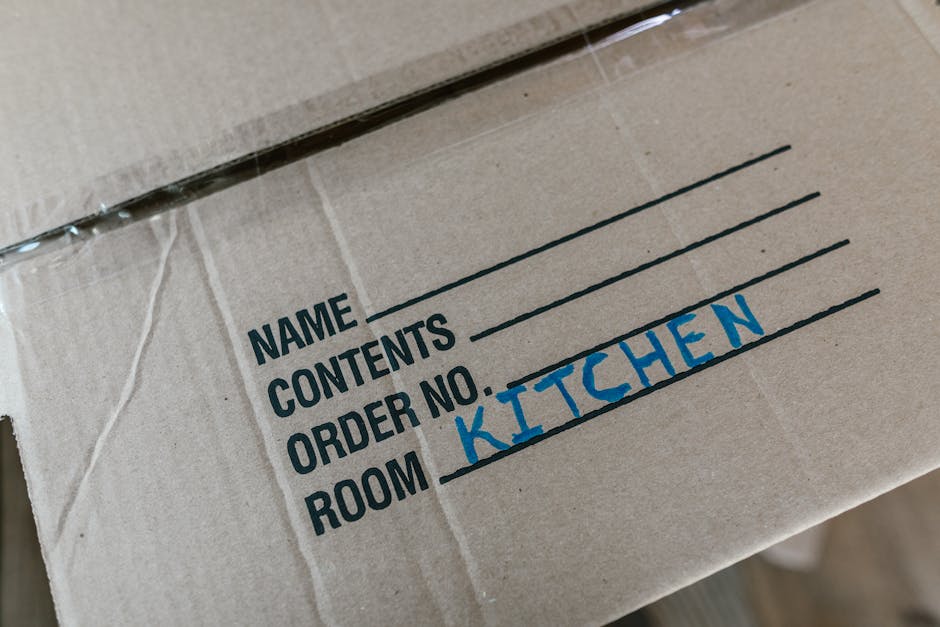
Use strong tape across the base and top of the box. Then label it on multiple sides with words like Fragile, This Side Up, and the room it belongs in. Clear labels help movers and family members treat the box properly. If it helps, mark boxes with a colour system too. A simple kitchen, living room, or bedroom code can save time on the other end.
8. Load carefully and keep fragile boxes visible
When the van is loaded, fragile boxes should not be crushed under heavy items. They belong on a stable surface where they will not slide around. If possible, place them where they can be unloaded earlier and handled with care. No one wants to dig through a pile of coats and kettles to find the box marked glassware.
Expert tips for better results
Once you understand the basics, the real improvement comes from small refinements. These are the details that experienced movers and packers tend to use without making a song and dance about it.
- Use small boxes for heavy fragile items: A tiny box of plates is easier to carry safely than one large box overloaded with weight.
- Pack plates vertically when possible: They often handle movement better this way, provided they are well cushioned between each piece.
- Double-box especially delicate items: For particularly valuable or brittle items, place the wrapped item in a smaller box and then cushion that inside a larger box.
- Do not overdo bubble wrap: More is not always better. Too much loose wrapping can create a bulky package that shifts oddly.
- Keep a first-day essentials box separate: A few everyday mugs or glasses for immediate use should not be buried under ten other boxes.
- Photograph valuable items before packing: It helps you remember condition and makes unpacking easier if you are inventorying contents.
A small human observation: people often pack precious items too carefully in one sense and not carefully enough in another. They wrap the item beautifully, then put it in a massive box with three centimetres of empty space. That is how the breakage sneaks in. The protection needs to be around the item, and around the box, too.
If the move is more complex, for example a larger property or office relocation where delicate equipment is involved, you may also want to look at office relocation services or commercial moves for a more structured approach to packing and transport.
Common mistakes to avoid
Most packing errors are predictable. That is actually good news, because predictable problems are easy to fix once you know what to look for.
- Using oversized boxes: A large box encourages movement and can become too heavy to lift safely.
- Mixing too many item types: Different shapes and weights can damage one another during transit.
- Leaving empty space: Gaps are the enemy. They let items shift and clash.
- Packing too quickly: Rushing leads to poor wrapping, weak tape jobs, and missed labels.
- Forgetting the base and top: People often wrap the item itself but neglect the cushioning underneath and above it.
- Overloading the box: Even strong cardboard has limits, and your back does too.
- Failing to label on multiple sides: A box stacked in a pile may hide the only label you wrote.
One more thing people miss: delicate items should be packed before the move becomes frantic. If you leave the glassware until the final hour, every decision gets worse. You are tired, the kettle is missing, and somebody has taken the tape. Not ideal.
Tools, resources and recommendations
You do not need specialist equipment for every move, but the right basics make a real difference. If you are assembling a packing kit, start here:
| Item | Why it helps | Best use |
|---|---|---|
| Small and medium boxes | Keep weight manageable and reduce movement | Glassware, dishes, decor, compact valuables |
| Packing paper | Wraps surfaces without adding too much bulk | Plates, bowls, ornaments, frames |
| Bubble wrap | Provides shock absorption for breakables | Glass, ceramics, lamps, fragile electronics |
| Strong packing tape | Keeps boxes sealed under movement and weight | Sealing bases, tops, and reinforced edges |
| Markers and labels | Helps identify contents and handling needs quickly | Room labels, fragility warnings, unpacking priority |
| Soft towels or linens | Useful for padding non-scratch surfaces | Wraps for some home items, additional void filling |
If you prefer a more hands-off move, a provider such as man and van or removal companies may be suitable depending on how much you need carried and how much packing support you want. For lighter jobs, a man with a van setup can be enough, though the packing still needs to be done properly on your side.
It can also help to keep related reading in one place. If you are planning the wider move, articles such as the comprehensive checklist for packing when changing homes and DIY versus professional removals can help you make better decisions around timing and support.
Law, compliance, standards, or best practice
For most households, packing fragile items is not a regulated activity in the formal sense. Still, there are clear best practices that reputable movers follow. Good companies work with sensible handling methods, appropriate insurance arrangements, and a general duty of care for items in transit. If you are hiring a removals team, it is wise to check what is covered, what is excluded, and what you are expected to pack yourself.
Insurance is worth understanding in plain English. Some cover arrangements may depend on how items were packed, whether they were declared as fragile, and whether the mover handled them or you did. That is why accurate labelling and proper packing are not just nice-to-haves. They can affect how claims are assessed if anything goes wrong. The details vary, so always read the terms carefully.
Reputable firms will usually encourage safe lifting, sensible stacking, and clear communication about delicate pieces. They may also set expectations around items they will not move or items that require special handling. If you are unsure, ask before moving day rather than after something has been damaged. A five-minute conversation can save a lot of grief.
For company background and policy details, you can also review pages such as insurance and safety and health and safety policy to understand the sort of standards a professional moving business should be able to discuss clearly.
Options, methods, or comparison table
There are a few different ways to pack fragile items, and the right one depends on the item, your budget, and how much risk you are willing to accept. Here is a useful comparison.
| Method | Best for | Pros | Limitations |
|---|---|---|---|
| DIY with standard packing materials | Everyday glassware, crockery, ornaments | Affordable, flexible, easy to scale | Depends on your patience and technique |
| DIY with extra reinforcement | More delicate or valuable household items | Better protection, still cost-controlled | Takes more time and material |
| Professional packing service | High-value, numerous, or awkward fragile items | Efficient, consistent, lower handling stress | Higher cost |
| Mixed approach | Typical family move with a few valuable pieces | Balanced cost and convenience | Needs clear planning about who packs what |
In practice, the mixed approach is often the sweet spot. You pack the ordinary kitchenware, and a professional team handles the more awkward items. That keeps the budget sensible without gambling on the pieces you care about most.
Case study or real-world example
Consider a typical London flat move. Nothing dramatic, just a third-floor property, a bit of stair traffic, and a kitchen full of fragile stuff that has somehow multiplied over the years. There are wine glasses, six plates that never quite matched anything, a couple of framed prints, and two lamps with awkward bases.
The move goes better when the packing starts two days early. Glasses are wrapped individually and placed in a small box with padded void fill. Plates are stacked vertically with paper between each piece. Frames are wrapped in soft material and grouped by size. Lamps are taken apart where possible, with cords secured neatly so they do not snag. Each box is labelled on more than one side and marked as fragile.
On moving day, the boxes are carried out early, loaded upright, and not buried under heavy furniture. There is no dramatic crash in the van. No last-minute rummaging. No one says, "I think that box had the good glasses in it," which is always a relief.
The real lesson? The move feels less frantic because the fragile items were treated as a system rather than a pile of things to get through. That is the professional mindset, and it works even in a normal home setting.
Practical checklist
Use this checklist as a final pre-move scan. It is simple, but that is exactly why it helps.
- Choose small or medium boxes for fragile items
- Gather packing paper, bubble wrap, tape, and labels
- Wrap each fragile item individually
- Pad the bottom and sides of each box
- Fill all gaps so nothing moves inside the box
- Keep heavy items separate from lighter breakables
- Do a gentle shake test before sealing the box
- Label the box on multiple sides
- Mark the room and handling priority clearly
- Load fragile boxes where they will not be crushed
- Keep a first-night essentials box apart from the rest
- Check insurance and packing responsibilities before moving day
If you can tick most of those off, you are already ahead of the curve. Seriously. A lot ahead.
Get a free quote today and see how much you can save.
Conclusion
Packing fragile items for removals like a pro is not about being fussy for the sake of it. It is about making sure delicate things survive a day of lifting, turning, stacking, and transport without drama. The formula is straightforward: use the right materials, wrap properly, remove movement, label clearly, and load carefully. That is the whole game.
If you are moving soon, start with the fragile items first rather than leaving them until the end. You will feel more in control, and the boxes will be much safer for it. A calm, tidy packing method always beats a rushed one. Always.
And if you want a move that feels a bit less like chaos in a cardboard box, keep the fragile stuff steady, simple, and well protected. Your future self, unpacking on the other side with a cuppa nearby, will be very glad you did.
Frequently Asked Questions
What is the best way to pack fragile items for removals?
The best way is to wrap each item individually, use a properly sized box, pad the bottom and sides, fill every gap, and label the box clearly. The goal is to stop movement inside the box and prevent items touching hard surfaces.
Should I use bubble wrap or packing paper?
Both have their place. Packing paper is excellent for general wrapping and separating items, while bubble wrap is better for extra shock absorption around more delicate pieces. In many moves, people use both together.
Are large boxes bad for fragile items?
Usually, yes. Large boxes encourage movement and can become too heavy. Small or medium boxes are usually safer because they are easier to fill properly and easier to carry without strain.
Can I pack plates flat?
You can, but many professionals prefer to pack plates vertically with padding between each one because it can reduce pressure on the stack. Whichever method you use, the plates must be well cushioned and tightly packed.
How do I stop glassware from breaking in a move?
Wrap each glass separately, use a sturdy box, add cushioning at the bottom and between items, and make sure there is no empty space for them to knock together. A box that rattles is a box that needs more filler.
Do fragile boxes need to be labelled?
Yes. Clear labels help movers, family members, and you treat the boxes properly. Marking them on multiple sides is even better, especially if the boxes will be stacked in the van or in a hallway.
Is it worth paying for professional packing services?
If you have valuable, awkward, or numerous fragile items, professional packing can be worth it. It saves time and reduces handling stress. For simpler moves, a mixed approach may be the most practical option.
Can towels or clothes be used to pack fragile items?
Yes, sometimes. Soft towels, jumpers, and linens can work as extra padding for less delicate items. That said, they should not replace proper protection for glass, ceramics, or anything easily damaged.
How early should I pack fragile items before moving day?
Ideally, begin a few days ahead of time, or even earlier if you have a lot of breakables. Packing in a calm state almost always leads to better results than rushing the night before.
What should I do with especially valuable fragile items?
For high-value or sentimental items, consider double-boxing, using extra cushioning, and keeping them with you if feasible. If in doubt, ask the removals company how they handle specialist items and what their insurance terms cover.
What is the biggest mistake people make when packing fragile items?
The biggest mistake is leaving empty space inside the box. Even a well-wrapped item can break if it is free to move around during transit. A snug box is a safe box, more often than not.
Should fragile items go on the moving van last?
They should usually be loaded in a position where they will not be crushed and can be unloaded carefully. The exact order depends on the rest of the load, but they should never sit under heavy items. That is asking for trouble.
What if I am only moving a short distance?
Even short moves can damage fragile items because loading and unloading create movement and impact. Distance helps a little, but it does not remove the need for proper packing. A ten-minute trip can still break a badly packed box.
Do I need special packing for mirrors and frames?
Yes, mirrors and frames need extra edge protection and careful wrapping. Protect corners well, use cushioning on the front and back, and keep them upright where possible during transport. They are awkward rather than impossible, which is a small comfort.